
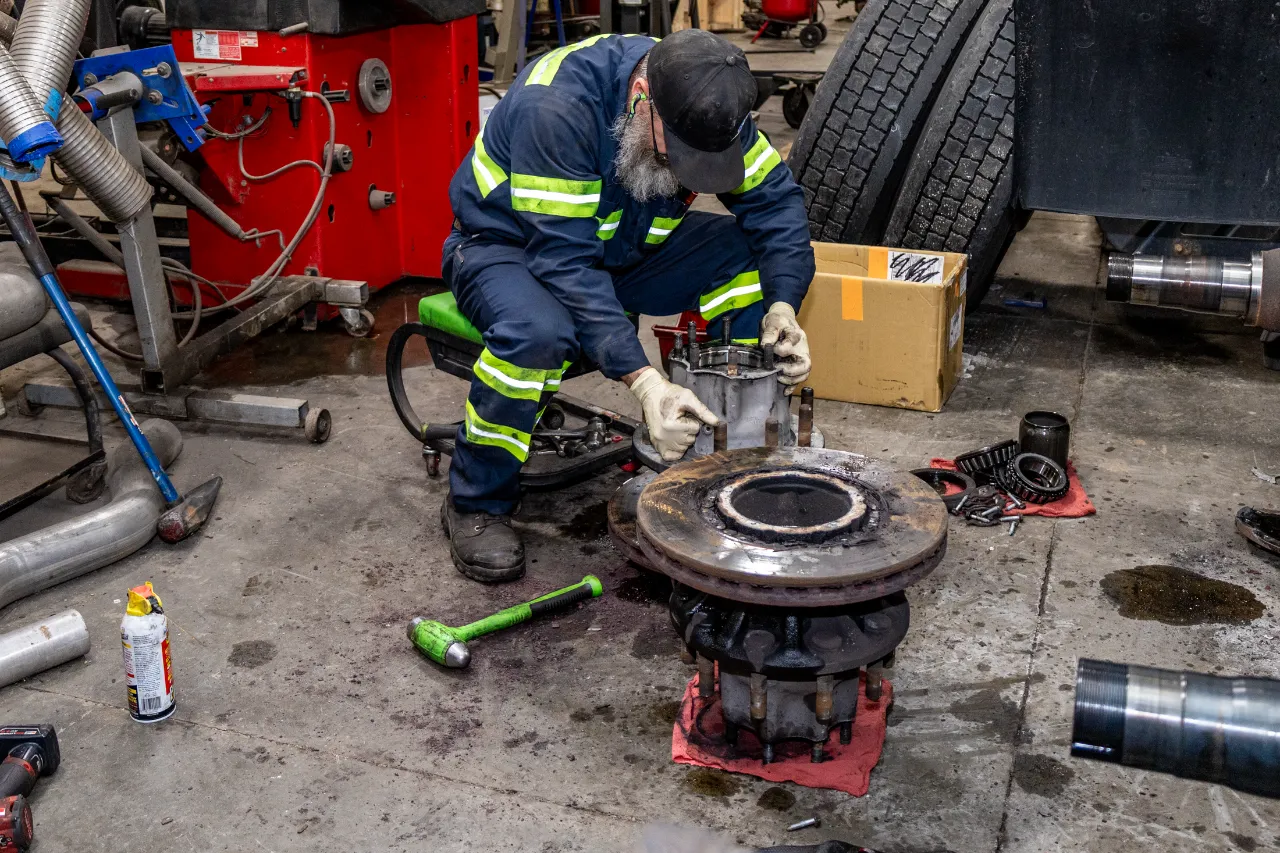
1. Drain and Inspect Your Air Tanks
First things first, check for moisture.
Your air compressor constantly pulls in outside air. Even with a functioning air dryer, condensation can build up in your compressed air tanks during colder months. Water in your air system can lead to corrosion, frozen lines, and reduced braking performance.
Manually drain each air tank. If you notice excessive water, rust flakes, or oily residue, your air dryer may need service. Don’t shrug this off. Moisture in the system compromises reliability and shortens component life.
2. Inspect the Brake Drums and Brake Shoes
Winter road grime and long descents can wear down friction components faster than you’d expect. Pull the wheels and inspect your brake drums for:
- Heat cracks
- Grooving
- Out-of-round wear
- Blue discoloration from overheating
Next, examine the brake shoes. Uneven wear often signals adjustment issues or a sticking S-cam. Thin linings reduce stopping power and increase stopping distance, especially under load.
If your brake shoes are nearing minimum thickness, replace them now. Waiting until peak hauling season invites downtime you don’t need.
3. Check Slack Adjusters and Pushrod Travel
Your slack adjuster plays a critical role. It maintains a proper distance between the brake shoe and drum as the linings wear down. If it’s out of adjustment, your pushrod must travel farther to engage the brakes, reducing responsiveness.
Measure pushrod stroke length during a brake application. Excessive travel means the brakes are out of spec. Automatic slack adjusters should self-correct, but they still require inspection and lubrication.
If you’ve ever felt a “soft” brake pedal in an air brake system, excessive slack could be the culprit.
4. Inspect the S-Cam and Bushings
The S-cam rotates every time you apply the brakes. Over time, bushings wear down, causing misalignment. That misalignment leads to uneven shoe wear and reduced braking efficiency.
Check for excessive camshaft play. Look for signs of rust, binding, or dry bushings. A sticking S-cam reduces braking power and can cause one wheel end to overheat while others underperform.
Spring is the ideal time to lubricate cam tubes and verify smooth rotation.
5. Test Your Air Compressor and Air Dryer
Your entire braking system depends on properly compressed, moisture-free air.
Start the truck and monitor the air pressure build-up time. If your air compressor struggles to reach operating pressure within the recommended timeframe, it may be wearing out.
Next, verify your air dryer is functioning correctly. A faulty dryer allows moisture to enter the system, leading to internal corrosion in service chambers and airlines.
Listen for air leaks while the system is fully charged. Even small leaks reduce system efficiency and force your compressor to work overtime.
6. Evaluate Brake Balance and Performance
After inspections and adjustments, perform a controlled brake test.
Pay attention to:
- Pulling to one side
- Delayed brake response
- Vibrations during stopping
- Uneven brake temperature across axles
Brake imbalance often points to uneven adjustment, worn components, or air delivery issues. In heavy-duty applications, imbalance increases tire wear and stresses your suspension system.
Catching these issues early prevents expensive repairs down the road.
7. Don’t Forget the Heat Factor in Southern Arizona
Spring in Southern Arizona quickly turns into scorching summer. High temperatures accelerate brake wear and increase the risk of brake fade during long hauls.
Heat expands metal components, intensifies friction, and stresses your brake drum assemblies. If your brakes are already marginal after winter, summer heat will expose the weakness fast.
Getting ahead of these issues now keeps your truck reliable when desert temperatures spike.
Practical Tips for Spring Brake Readiness
- Drain air tanks weekly during seasonal transitions.
- Schedule a professional brake service before heavy hauling begins.
- Lubricate slack adjusters and cam tubes per manufacturer intervals.
- Replace worn brake shoes in axle sets to maintain balance.
- Monitor air pressure gauges for abnormal fluctuations.
Preventive maintenance always costs less than roadside repairs.
The Bottom Line
Winter may be coming to an end in the coming months, but its effects can linger in your air brake system, slack adjusters, S-cams, and brake drums. Spring gives you the opportunity to inspect, adjust, and refresh before extreme heat and demanding workloads arrive.
Stay proactive. Stay safe. And make brake maintenance part of your seasonal routine, not an afterthought.
News & Articles
Read About The Latest in Industry
Lorem ipsum dolor sit amet, consectetuer adipiscing elit. Aenean commodo ligula eget dolor. Aenean massa. Cum sociis natoque penatibus et magnis dis parturient montes, nascetur ridiculus mus.
.webp)


Customer Testimonials
"I was dead in the water at a job site in queens creek. bad batteries, the guys brought out 4 new batteries in about an hour after I got off the phone with them. Was very happy with the prompt service. The mobile service fee was a little high, but what isn’t nowadays. I would defiantly call them again if I was in the area."
"Such good service and so knowledgeable. Took us in on an emergency basis despite being busy! Explained it all to us non-mechanics and answered all our questions."
"Justin has great communication and very affordable. Came out at 10p on a Saturday to complete a DOT inspection. Very knowledgeable and honest, need more mechanics like Justin.High recommended you will NOT BE disappointed."
Contact Us
Let us know what is going on with your vehicle, and we will get back to you soon with a quote.